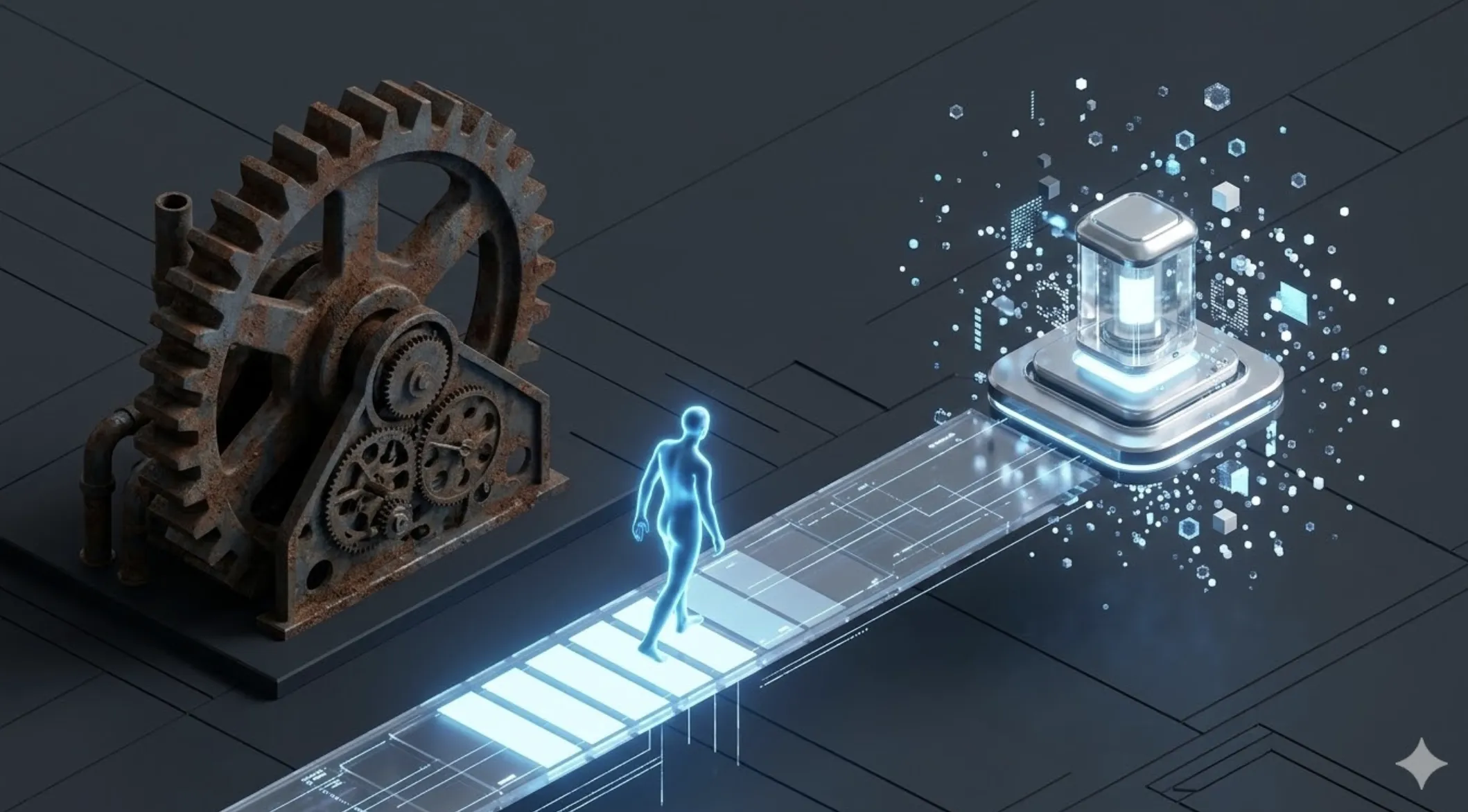
Operational Nostalgia: The Psychological Barrier to AI
💡 Quick Tip
Is operational nostalgia braking your digital transformation? In 2026, attachment to obsolete manual processes is the main obstacle to technological ROI and structural AI efficiency.
The Steam Engine and Resistance to Change
In the late 18th century, experienced operators clung to manual methods against the steam engine, out of nostalgia for their own mastery. In 2026, operational nostalgia is the ghost haunting IT departments. Attachment to 'the way we've always done things' is the greatest enemy of real engineering. It is the difference between honoring the past and being trapped in it while future bits overtake us.
The Thesis: Manual Process as an Expensive Remote Control
Maintaining infinite spreadsheets and manual validations in the agentic AI era is essentially using an expensive remote control for technology that should be autonomous. Many organizations 'buy' AI but force it to work under 20th-century analog processes. The result is structural inefficiency where cutting-edge hardware is a slave to an obsolete mindset.
The Diagnosis: Habit Silos and Fear of Invisibility
The failure lies in habit silos. Professionals fear that if the process becomes invisible and automatic, they will lose their value. According to Cinto Casals, AI Engineer, this nostalgia creates resistance islands that prevent systemic integration. The paradox is that true mastery in 2026 is being the architect who designs the bit flow so the task performs itself.
📊 Practical Example
Real Scenario: From Manual Checking to Algorithm Auditing
In a financial firm, senior auditors resisted leaving manual invoice verification despite having an AI capable of doing it. By implementing interpretability tools, auditors shifted from performing mechanical work to supervising the model's logic. By letting go of their old methods, they tripled the firm's strategic analysis capacity.