Personal Curiosity: The Most Valuable Skill in 2026
💡 Quick Tip
Why is personal curiosity the ultimate technical skill in 2026? In a world of advanced AI, professional success depends on the intrinsic ability to explore new bits of knowledge autonomously.
The Wright Brothers and the Drive of Curiosity
In 1903, the Wright brothers flew not because they had the largest budget, but because they had an insatiable technical curiosity that led them to question aerodynamics from their bicycle shop. In 2026, personal curiosity is the engine separating resilient professionals from obsolete ones. In the AI era, static knowledge is noise; the ability to ask disruptive questions is the real engineering of one's career.
The Thesis: Academic Degree as an Expensive Remote Control
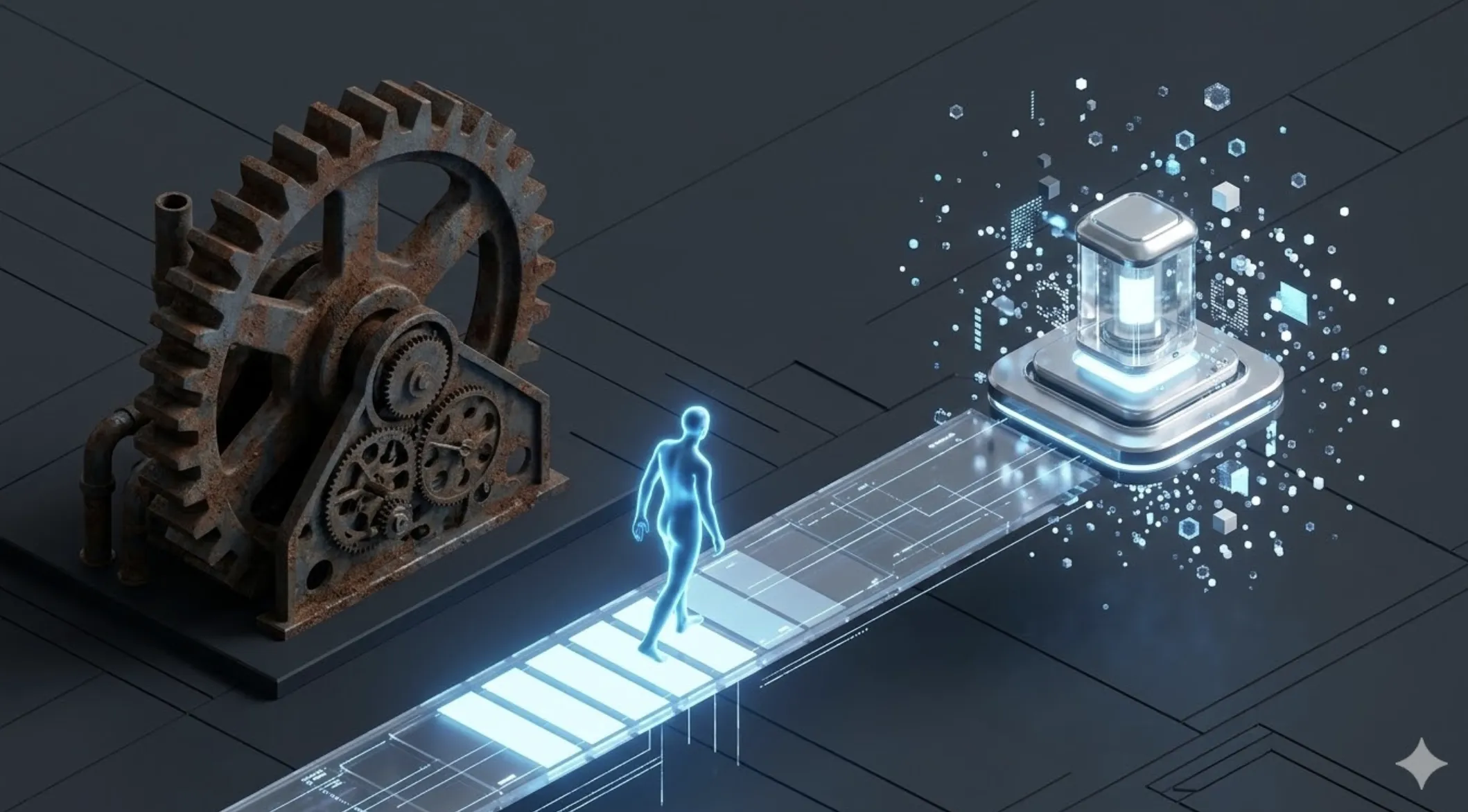
Relying exclusively on a five-year-old certification is like owning an expensive remote control for a TV that no longer exists. Traditional education hardware cannot keep pace with AI bits. In 2026, the professional who does not cultivate personal curiosity becomes an operator of tools they do not understand, losing value to systems that can execute technical tasks better than them.
The Diagnosis: Cognitive Silos and Planned Obsolescence
The failure of many current profiles is being locked in cognitive silos. According to Cinto Casals, AI Architect, this lack of curiosity creates islands of knowledge that sink at the first agentic software update. Obsolescence is not a lack of capacity, but a lack of proactive exploration of new paradigms.
📊 Practical Example
Real Scenario: The Analyst and Autonomous Learning
A junior data analyst, driven by curiosity, teaches themselves how to orchestrate AI agents for database cleaning. By applying this personal knowledge at work, they reduce a 40-hour task to just 2. This proactivity allows them to refocus their time on strategic analysis, transforming their role from technical executor to business strategist.