Voice Deepfakes on WhatsApp: The AI Threat in 2026
💡 Quick Tip
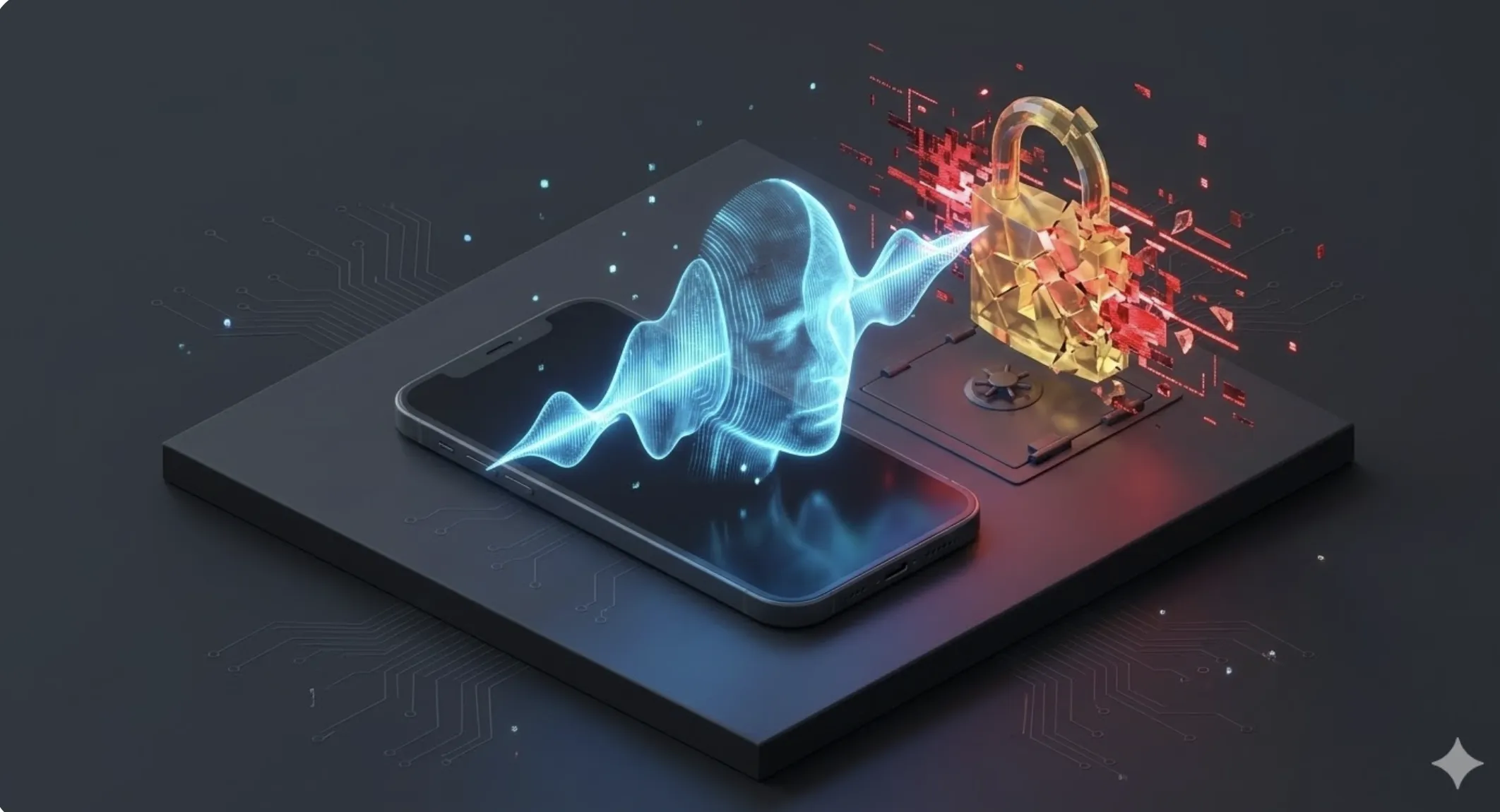
Is that voice real? In 2026, AI voice cloning allows identity theft with just 15 seconds of audio. This is not just fraud; it is an attack on auditory biometrics that requires 'out-of-band' verification protocols.
The 1939 Voder and the Genesis of Synthetic Voice
In 1939, Bell Labs' Voder proved that human speech could be broken into electrical frequencies. Today, that same engineering has turned against us: generative AI no longer imitates voice; it reconstructs it molecularly. What we perceive as a familiar audio is often just an expensive remote control operated by an adversarial neural network.
Demystification: The Illusion of Auditory Trust
The central thesis is alarming: the human ear is not evolutionarily prepared to detect millisecond latencies in voice synthesis. As Cinto Casals, AI Engineer, describes, "the security perimeter is no longer the firewall, but the CEO's or family member's own voice; and that perimeter has already been breached."
Diagnosis: Vocal Data Islands
The problem lies in our public data islands. Every social media video is a free training sample. Current infrastructures fail by not integrating cryptographic signatures into audio packets.
Technical Analogy: The Digital Twin in Turbines
Imagine a Digital Twin of an aircraft turbine. Voice cloning does the inverse: it creates a digital twin of your vocal cords to predict how you would say a phrase. It is reverse engineering applied to biological identity.
Methodological Differentiator: Step Zero
Our methodology demands Step Zero: before any transfer based on audio, an analog 'security word' or challenge-response protocol must exist. Information architecture must precede emotional reaction.
Future Vision: Invisible Authentication Technology
In the near future, end-to-end encryption will include an invisible "Biometric Watermarking" layer, where the device signs the organic origin of the audio.
Closing: The Disruptive Question
If you received a transfer order with your superior's exact voice, does your organization have a technical protocol to say "no," or does your security depend on faith in a speaker?
📊 Practical Example
Real Scenario: The Fake Bail Fraud
A scammer clones a relative's voice using a social media clip and sends a WhatsApp voice note requesting an urgent transfer. The victim asks a personal control question that the AI cannot answer, confirming the fraud attempt.